As ascertained through decades of experience (Our Business Model & Guiding Principles), there is a direct relationship between 1) the size of financial investment in procuring patents to build a patent portfolio, and 2) the chances of success, including the magnitude of such success, in any assertion of such patent portfolio. Based on this nexus, our business model focuses on securing capital to build out/bolster patent portfolios, both before & during patent assertion, to maximize returns.
The Investment Oso IP Secures
To put simply, in addition to a payment to the patent holder (to recoup costs to date), Oso IP secures investment in the order of hundreds of thousands of dollars worth of resources, which is more than what some patents sell for, to increase the quantity/quality of patent claims in a portfolio.
Why Investment is Critical for Success
Oso IP secures such investment because:
The claims of a patent are what frames a patent assertion that will dictate whether the patent holder wins or not, and if a win is achieved, how much will be paid/awarded (i.e. the case is nearly ALL about the CLAIMS).
Patent holders must finance millions of dollars for completing a single patent assertion of such claims in order to reach a resolution (i.e. each patent assertion is EXPENSIVE).
Patent holders typically have a limited number of “shots” (e.g. judgements) at getting to such resolution due to patent term and other legal obstacles (i.e. a patent holder has LIMITED OPPORTUNITIES at asserting its patents).
Specifically, Oso IP’s secured funding enables implementation of a “mock” mini-litigation of any currently-existent pending/granted claims, for the purpose of “predicting” what would happen in a “real-life” patent assertion and using a result of such work product to prepare/prosecute new patents/claims.
In terms of the rationale behind 1), 2), & 3) above, Oso IP’s secured funding ensures that:
The new patents/claims are best positioned for successful resolution of an initial assertion.
The initial millions of dollars of financing (for a first patent assertion) is put to best use, by the patent holder putting their “best foot forward” at the onset of an initial assertion (since such “lead” assertion is often a primary driver of value in any early resolution).
An additional patent assertion is ready to maximize leverage, only if necessary (as multiple judgements is not a guaranteed right).
What the Investment Enables
The investment that Oso IP secures, provides funding to:
Perform Preliminary (& On-Going) Litigation-Grade Analysis, including:
Draft/Prosecute New Initial (& Follow-On) Claims, by:
Build a World-Class Prosecution/Licensing Team, by:
Thus, while most enforcers simply: take a patent holder’s portfolio in its current “as-is” form, assert it, and see what happens, without taking on any significant measures to bolster the portfolio beforehand, Oso IP is an outlier in the market. Through Oso IP’s secured investment to provide the abovementioned value-adds, the difference in the patent owner’s share of returns (after Oso IP is compensated) typically dwarfs, in multiples, what could be earned by the patent owner “going it alone” with a simple, traditional “as-is” assertion.
Put simply, while others just help patent holders “file” a lawsuit, Oso IP secures the investment necessary to “win,” and maximize such “win,” by squarely addressing the “risks” that have resulted in the recent general devaluation of patents. A visual timeline comparison of our approach with others, is shown below.
TIMELINE OF ASSERTION WITH
TYPICAL ENFORCER

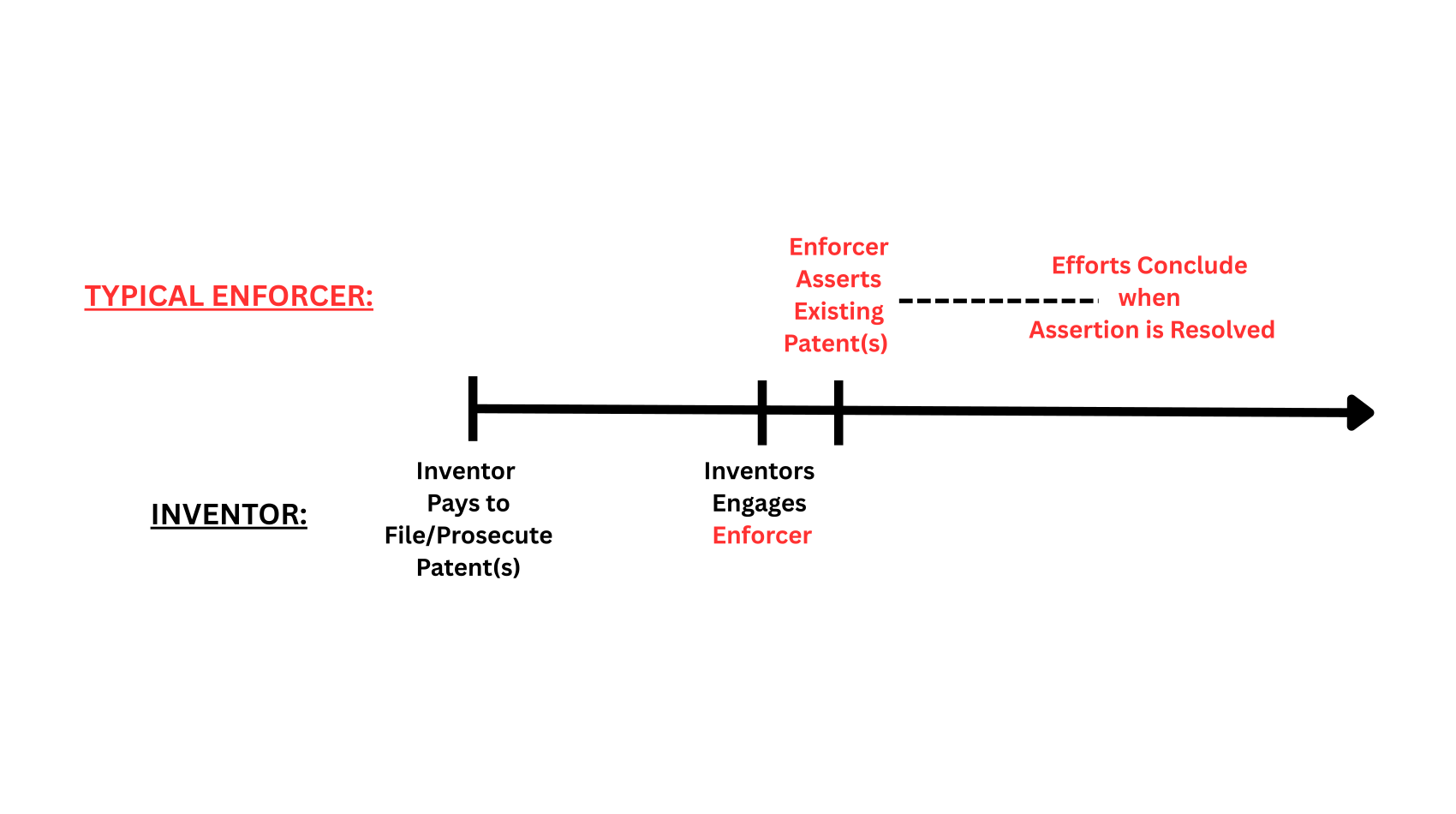
TIMELINE OF ASSERTION WITH
INVESTMENT SECURED BY OSO-IP
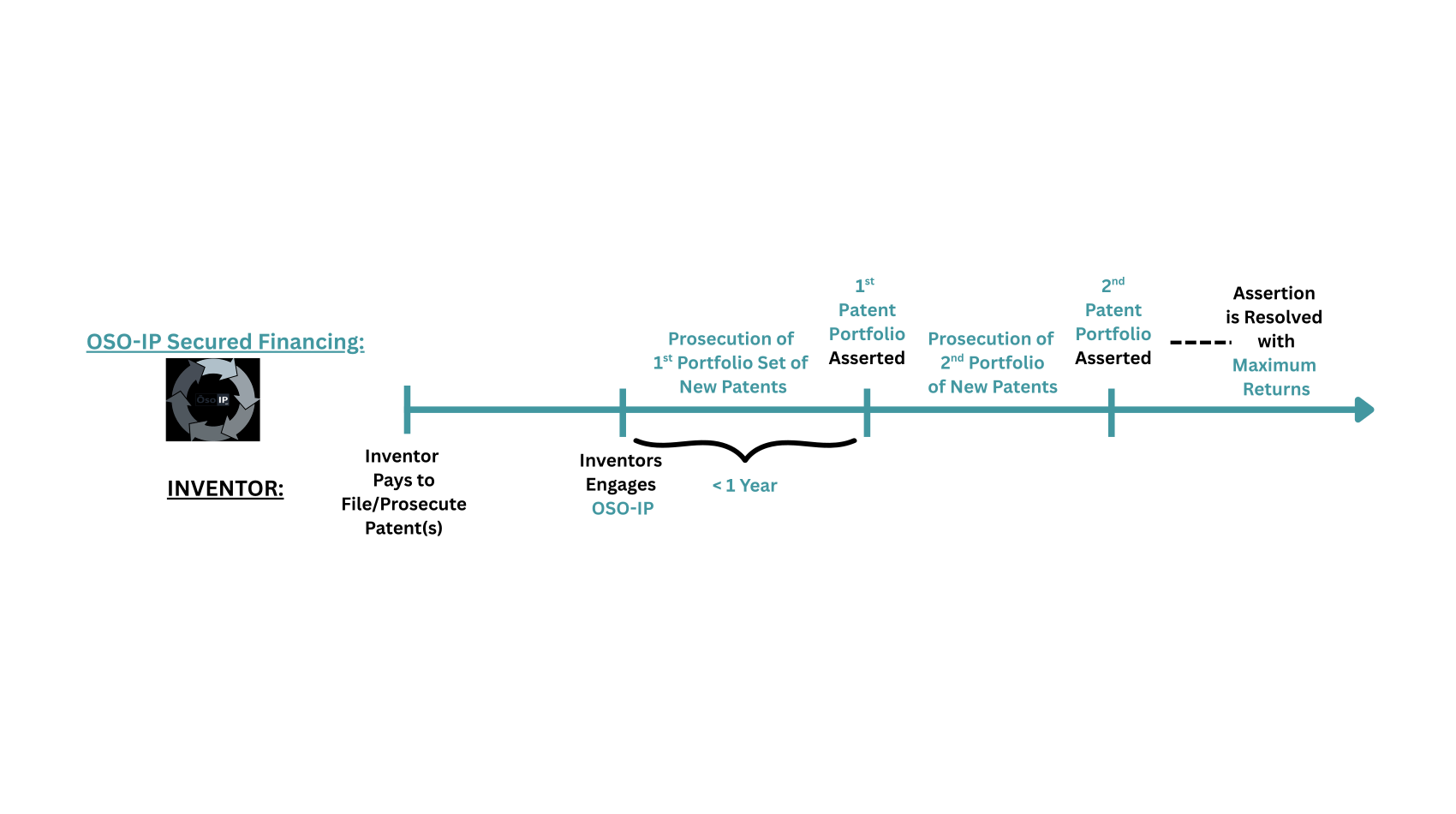
With the above said, Oso IP has very high standards as to which patent holders it engages. For example, substantive prosecution at this caliber indeed requires inventions with a lot of “meat on the bone,” so that there is a sufficient body of technical subject matter to claim. To put another way, while an old patent adage states that only ~1% of patents are “valuable,” Oso IP exclusively secures investment for only the top 1% of that 1% (i.e. less than .01% of all patents).